BARLUME by Giuseppe Arezzi
Barlume is a hanging lamp that evokes the lanterns which once ornamented the entrances of Sicilian palaces, providing light at night.
Its steel structure is adorned with transparent, coloured methacrylate trapezoids. The reflections of Barlume on the ceiling and walls recreate the atmosphere of night-time festivities.
Copyright Natale Leontini
MANICO by Giuseppe Arezzi
The Manico armchair is a brightly colored indoor seat that interprets the simplicity of rural life. Characterized by its lightness and transparency, Manico is made with the minimum use of material: equipped with an exposed wood structure and a fabric seat, it is completed by cushions that make it extremely accommodating.
“The Manico armchair, built with the handles of those tools that are no longer used, is now the new chair of the farmer who’s cooling off, under an olive tree, looking out at the machines that work for him: an ode to the more authentic and simple Sicilian culture.” Giuseppe Arezzi
Copyright Natale Leontini
FISCELLA by Giuseppe Arezzi
With its global yet local and neo-rural language, Fiscella finds its origins and takes its name from the classic straw basket used in Sicily and the Mediterranean area to make ricotta cheese.
Fiscella is a generously proportioned suspended object (H 1.50 x Ø 1m) made from traditional wicker weaving on a structure of painted brass rods. It hangs from the ceiling and can contain as well as be a lighting spot.
Copyright Natale Leontini
GIRO by Giuseppe Arezzi
Giro is a carpet that reimagines the traditional weaving technique in a contemporary key and refers to vernacular forms and functions. Giro is woven with a paper rope and narrates the iconography of the vernacular wheel, known as the first object of mobility. It is a partly empty circular form (Ø 2m), neutral in color (grey), free of decoration, which dialogues with the space that surrounds it.
Copyright Natale Leontini
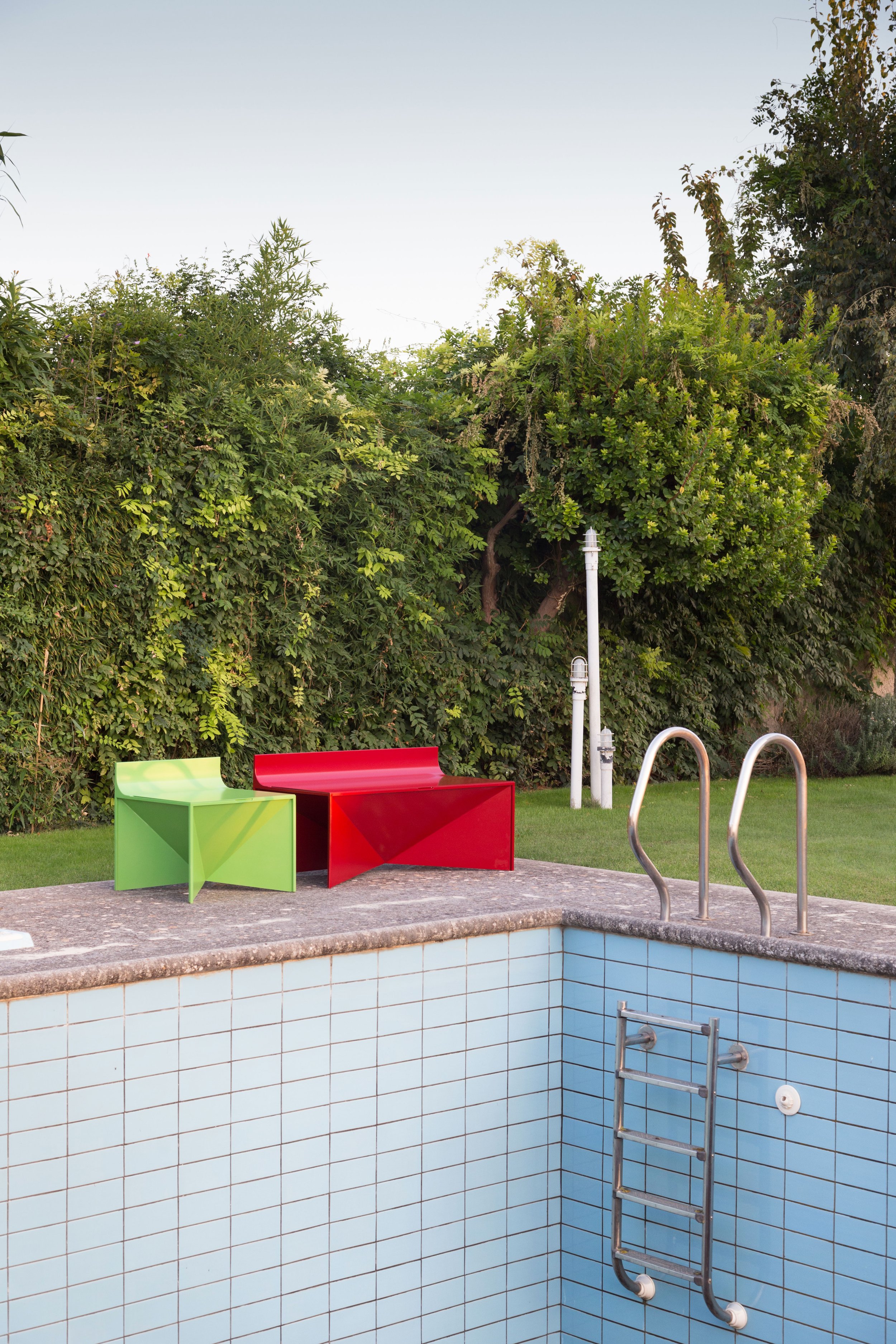
TRAMOGGIA by Giuseppe Arezzi
This is a contemporary reinterpretation of the traditional Italian cassapanca, or chest. Popular since the Middle Ages, the cassapanca was often the only piece of furniture in a household and could be used in various ways: as a container, a travel suitcase or simply as a table.
While Tramoggia offers a new aesthetic, it retains the same functional and spacious design. This new version, presented in two fresh colours, is made from 1,5 mm thick steel, giving the archetypal cassapanca a more contemporary and lightweight look.
Copyright Melissa Carnemolla
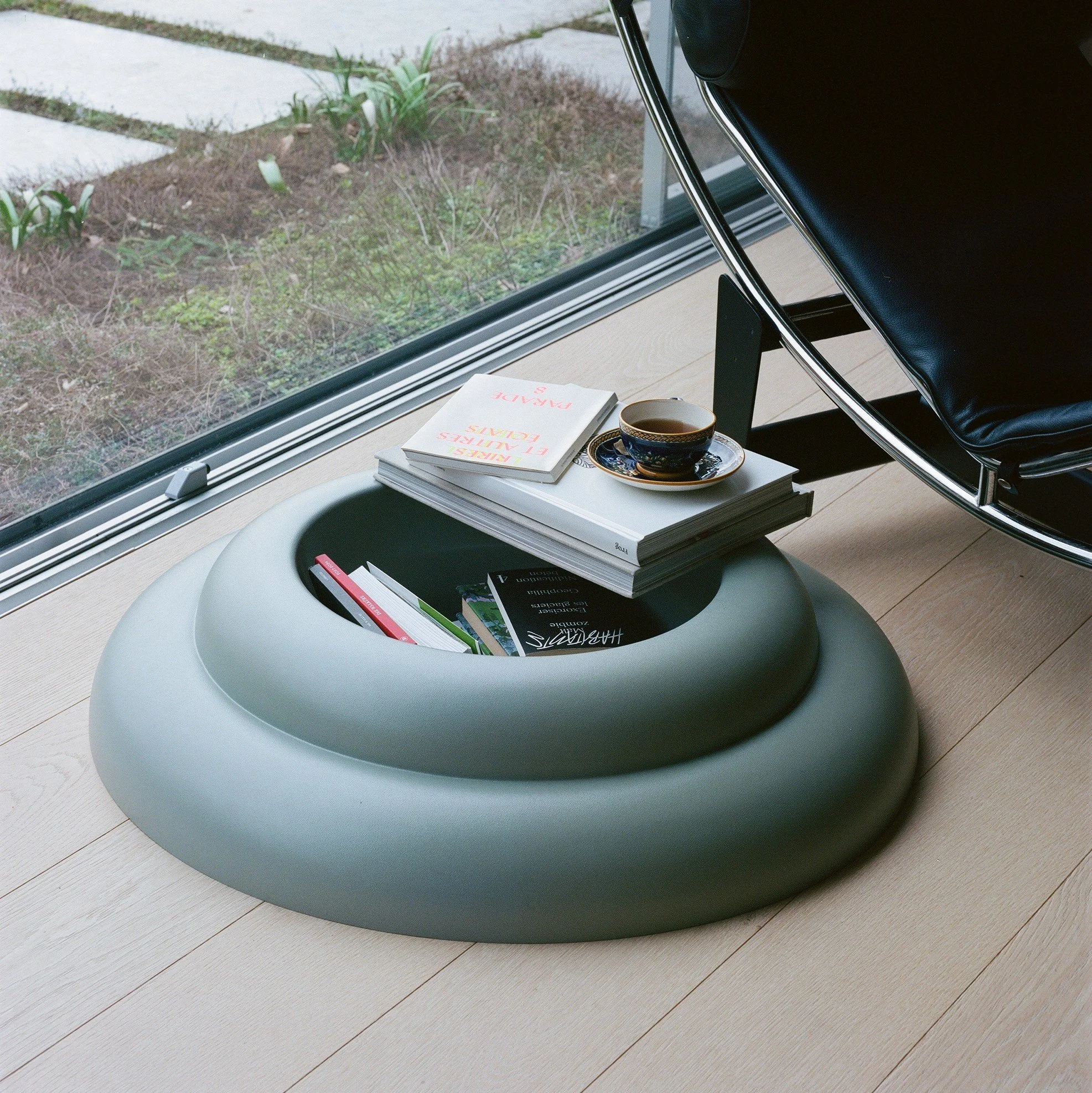
PILARS by Antoine Espinasseau
The Pilars are sculptures in thermo-formed plastic. The shapes of these sculptures display obvious references to classical architecture (notably recalling Doric column feet) but also to that of Italian plastic design, to which they could belong like a late child.
The Pilars have somehow missed their time, and their contemporary presence raises questions. Firstly, in their anachronism: as undateable relics, they combine classic form with modern materials, defeating any attempt at historical identification. Secondly, in their nature and function: they are hollow pedestals, deserted by the object they should have supported, whose absence they signal. This emptiness is an invitation to the imagination
Copyright Antoine Espinasseau
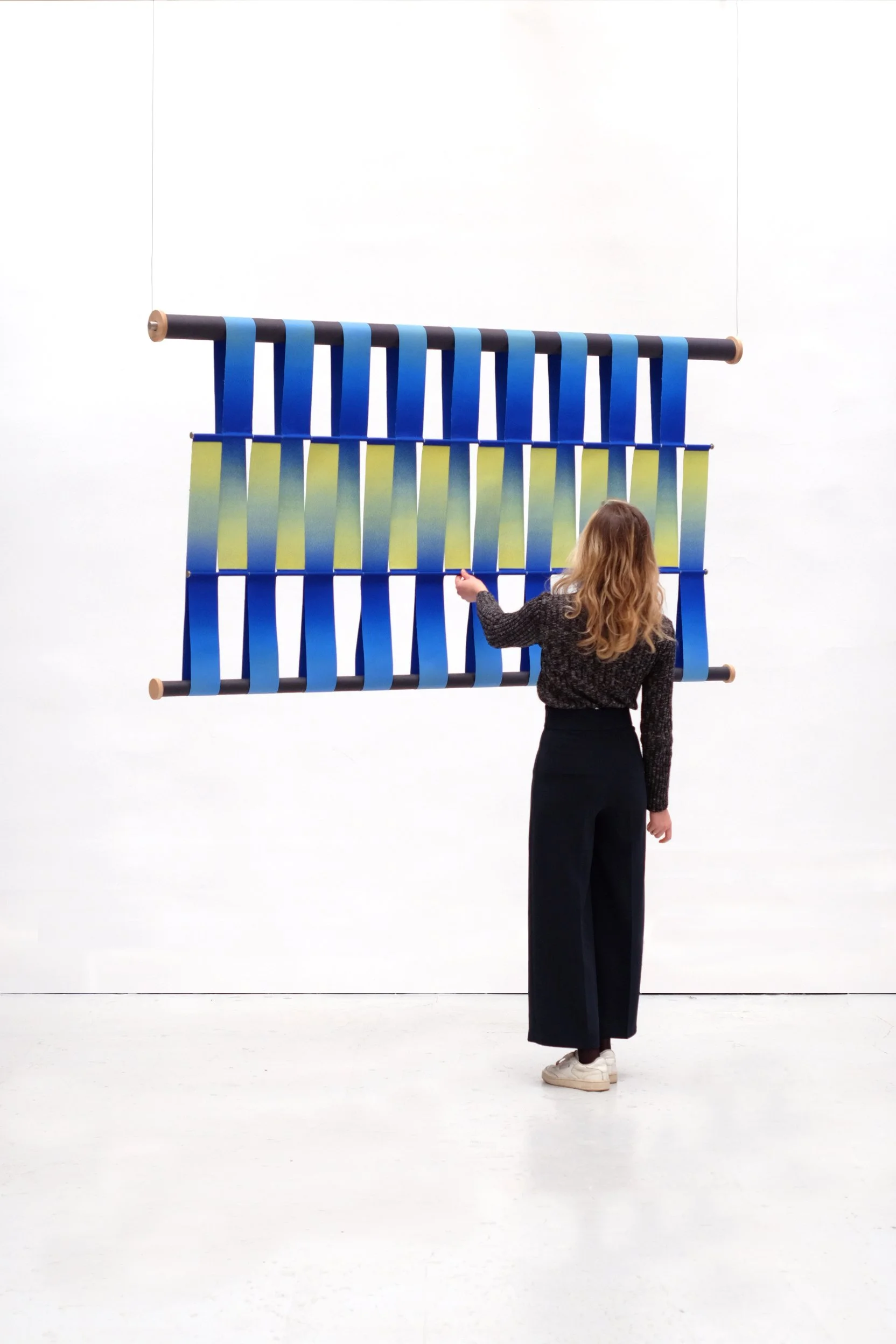
MIRAGE by Juliette Le Goff, Nicolas Verschaeve
Used as a screen, Mirage is a soft wall that enables people to take control of their own architecture. Thanks to its intermediate scale, it can be used to divide spaces for temporary uses and constantly evolving needs. You can simply open or close it by hand and change the colours through manipulation. The textile provides a delicate touch, and the range of colours allows people to influence their spaces and feelings. Mirage comes in two sizes to fit architectural standards.
Copyright Inter Faces studio